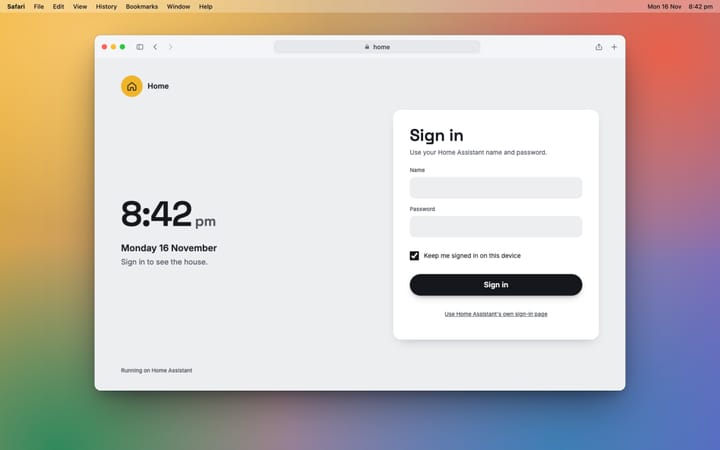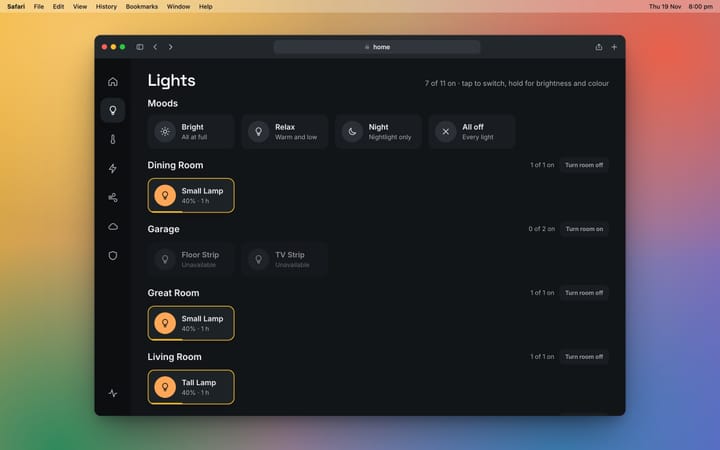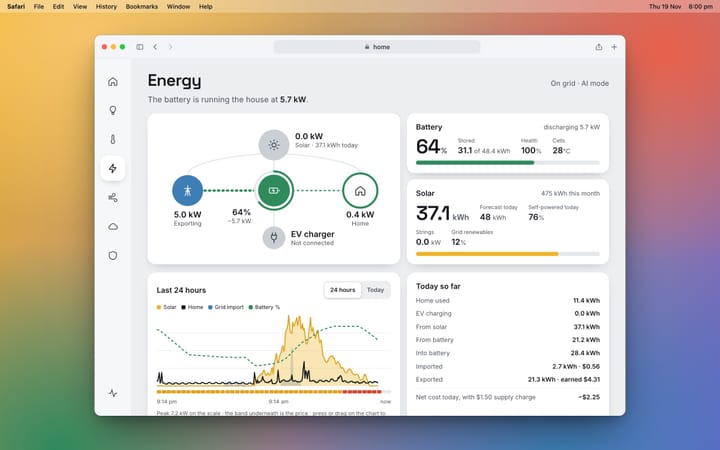
Part of the Home Dash series at Château KavSmith. Start with the story if you haven't. Last updated 19 November 2026.
I should say this up front: I'm not a developer, and I didn't write a line of the code behind Home Dash. I built it by talking to Claude Code, Anthropic's coding tool, over about five days. More than fifty versions went onto the wall in that time.
People hear that and assume one of two things. Either it's magic and I pressed a button, or it's a toy that'll fall over next week. It's neither, and the truth is more interesting, so here's how it actually went.
Who did what
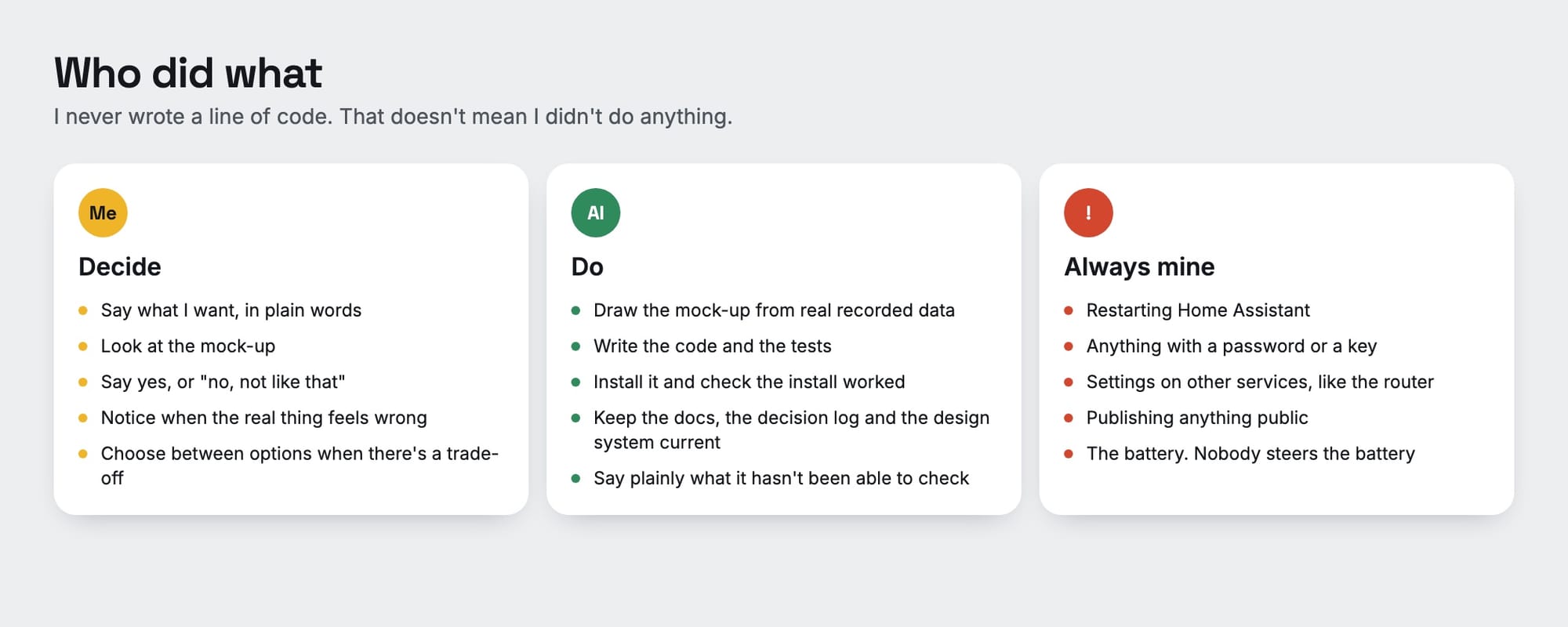
My job was deciding. What do I want to see? Does that look right? Is that the right word? Does it feel laggy? None of that needs code, but all of it needs someone who lives in the house.
The third column matters as much as the other two. Some things stayed with me no matter what: restarting Home Assistant, anything involving a password, settings on the router. A couple of times it could have pushed on and didn't, and told me what it needed me to do instead. I came to like that.
The routine that made it work
The single best thing we did was a rule I set on about day two, after it started building something I'd asked for before I'd seen what it would look like. I typed, fairly sharply: stop, don't do that until you show me a mock-up.
From then on it went: I describe it, it draws it using real recorded data from the house, a screenshot opens on my Mac, and I say yes or "no, not like that". Only then does anything get installed.
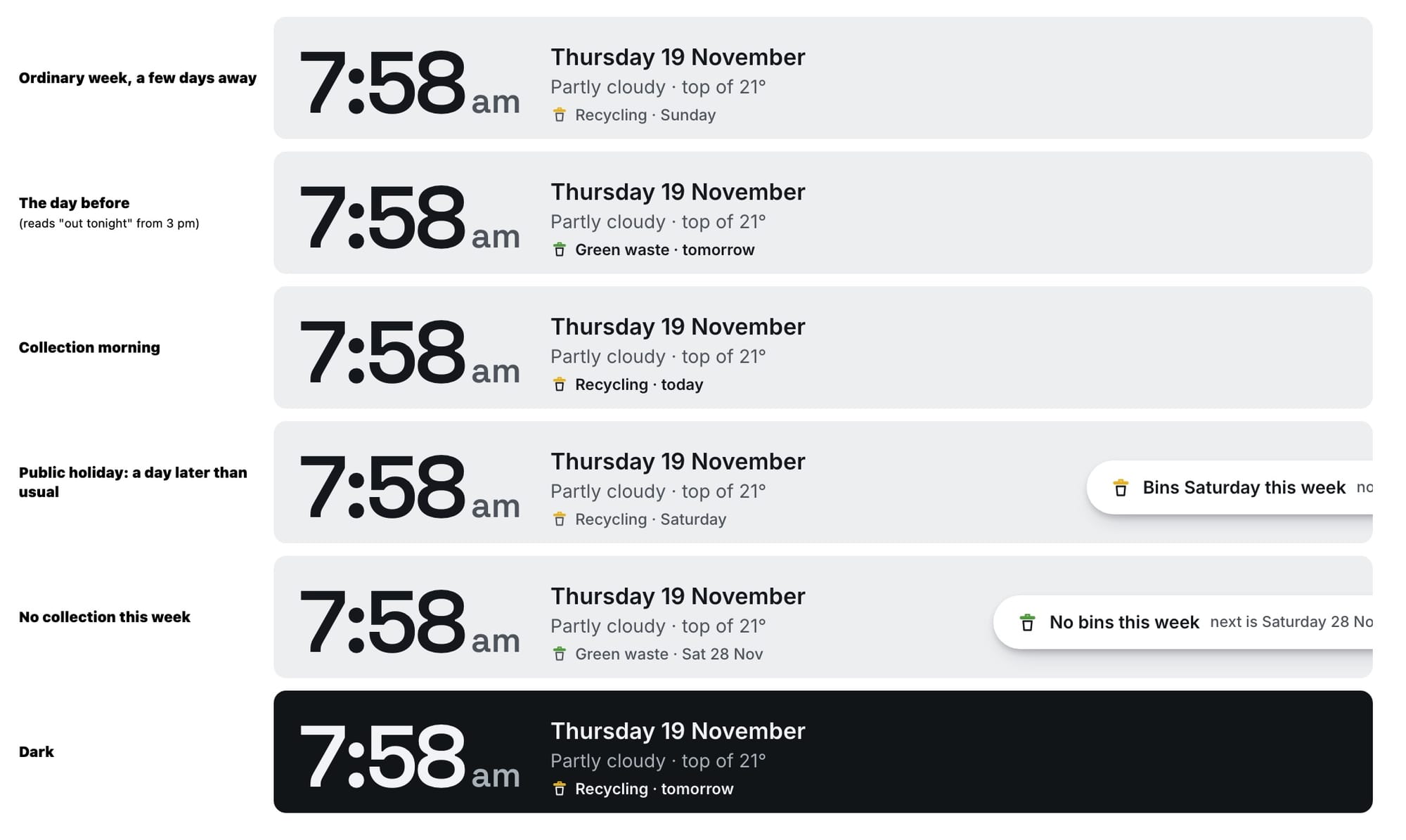
That one rule did two things. It stopped me being surprised. And it turned out saying "no" to a picture is far cheaper than saying "no" to something already built. The rain radar is the example: I asked for it, saw the mock-up, and decided I didn't want it after all. Total cost, ten minutes.
What surprised me
- It remembers. It keeps notes between sessions: decisions I've made, things I've said I don't care about, what's half finished. I didn't have to re-explain the house every morning.
- It tests its own work. Before anything went on the wall it ran the app in a hidden browser against a pretend version of the house. I didn't ask for that. It built it because it kept needing it.
- It tells me what it hasn't checked. This is the one I value most. Updates end with lines like "I haven't seen this on your screen" or "this has never actually fired". It would have been easy to just say "done".
- It asks the question behind the question. I asked for the air quality tile to stop lighting up. It came back with why it was lighting up, and two ways to fix it properly.
- It writes everything down. A change log, a decision log, a design system. I'd never have done that myself, and it's the reason the project is still tidy.
What went wrong
Plenty. That's the honest part.
- It declared a release finished that hadn't installed. My laptop was on the wrong Wi-Fi, the copy to the Pi quietly failed, and the version got labelled as live anyway. It caught it itself a minute later, undid the label, and told me. Now nothing gets labelled until the install is confirmed.
- Installs kept getting refused. Three tries one morning. It turned out its own installer was knocking on the Pi's door fifteen times in a row, and the Pi, reasonably, stopped answering. It fixed the installer to knock once.
- The test data went stale. The recorded snapshot of the house was a day old, so a test failed for a reason that had nothing to do with the change. Confusing for ten minutes.
- I asked for things I didn't want. Not its fault. But a tool that builds whatever you ask for, quickly, will happily build your bad ideas too. The mock-up rule is the seatbelt.
- Some of its first guesses about my house were wrong. It assumed the car charger hung off the house's supply. It doesn't. I said so, and the picture changed. It can't see my switchboard.
None of these were disasters, because every version is kept and going back is one command. I'd be a lot more nervous without that.
What I'd do differently
- Set the "show me first" rule on day one, not day two.
- Ask "is there a better way to build this?" much earlier. I asked on day two, and the answer reshaped the whole thing: it moved out of Home Assistant's interface into its own app. Doing that from the start would have saved a day.
- Never paste a password or key into the chat. I did, once or twice, and got politely told where it should live instead. Put secrets in a file and point at the file.
- Say "I don't care about that" out loud. I told it I didn't want phone notifications, and it stopped offering them. It can't know what you don't want until you say.
- Trust my own eyes over the green ticks. The tests passed and the lights still felt a touch slow. I said so, and that's where the instant-feeling taps came from. If it feels wrong, it is.
Would I recommend it?
Yes, with one caveat. It didn't replace knowing what I wanted. Every good thing in Home Dash started with me being annoyed at something specific: a label that lied, a tile that showed up four months early, a bin that never went away. The tool turned that annoyance into working software in minutes, which is a remarkable thing to be able to do from the couch. But the annoyance was mine.
If you've got a clear picture of what you want and the patience to say "no, not like that" a lot, you can build things now that you couldn't a year ago. That's the whole story.
For the record: this was Claude Code running Anthropic's Claude Fable model. The stories behind the design changes are in the design rules, and how it's tested and released is in what's running it.